Car Photography Editing in Photoshop: 5 Killer Techniques for Jaw-Dropping Results
Introduction
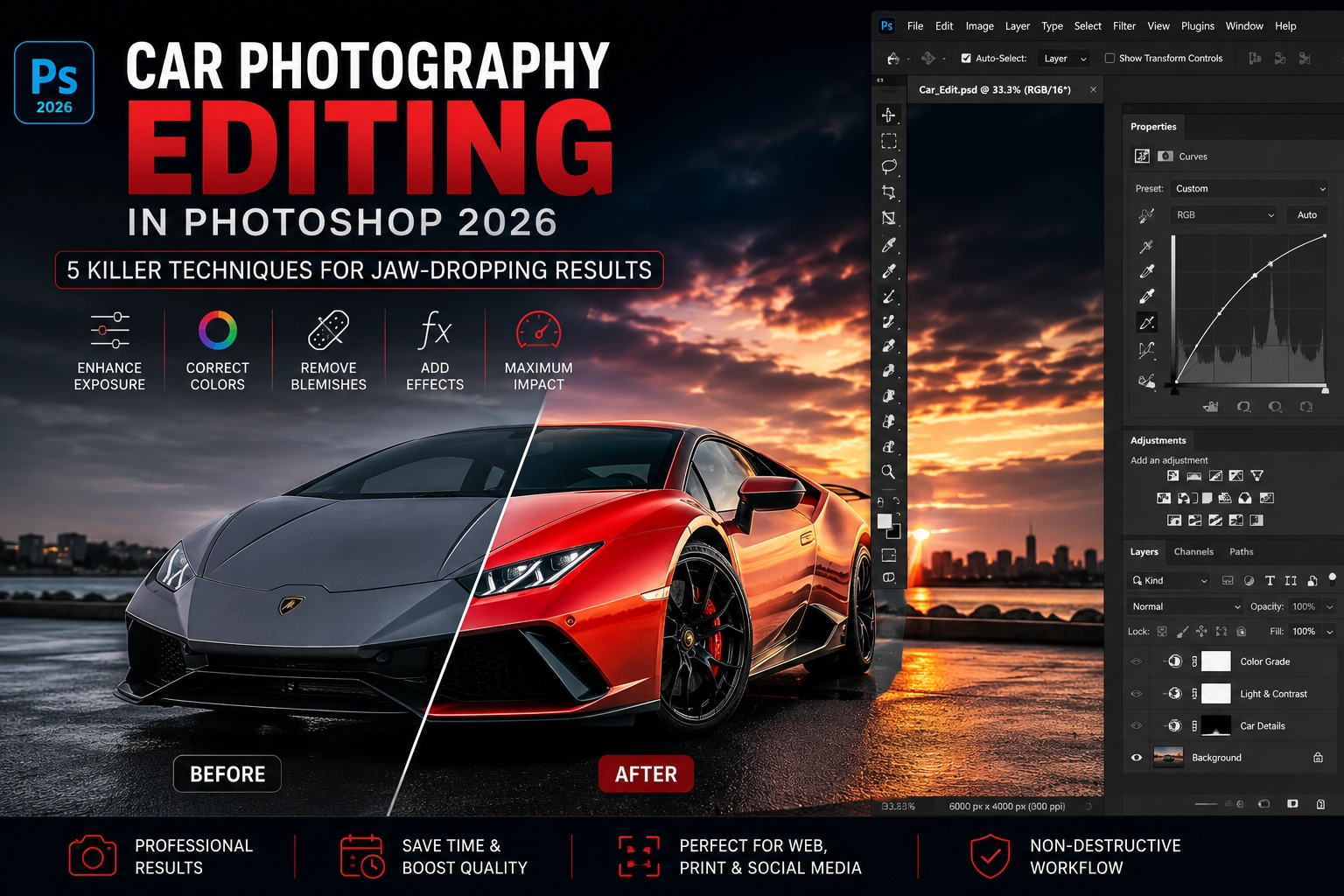
Car photography is a popular genre of photography, and for good reason. Cars are beautiful, powerful machines that can be incredibly photogenic. However, even the best car photos can be improved with professional editing. Photoshop 2026 offers powerful AI-assisted editing tools that make it easier than ever to enhance automotive images while maintaining realistic details and a natural finish.
Whether you’re photographing sports cars, luxury vehicles, classic automobiles, or commercial inventory, Car Photography Editing in Photoshop helps bring out the best in every image. With advanced features such as Camera Raw, the Remove Tool, Generative Fill, and professional color grading tools, you can improve lighting, remove distractions, enhance reflections, and create polished images that stand out.
In this blog post, we’ll explore Car Photography Editing in Photoshop techniques that can help you achieve jaw-dropping results. These techniques are easy to follow and, when combined with the latest Photoshop 2026 workflow, can dramatically improve the overall look, quality, and impact of your automotive photography.
1. Adjust the Exposure and Contrast
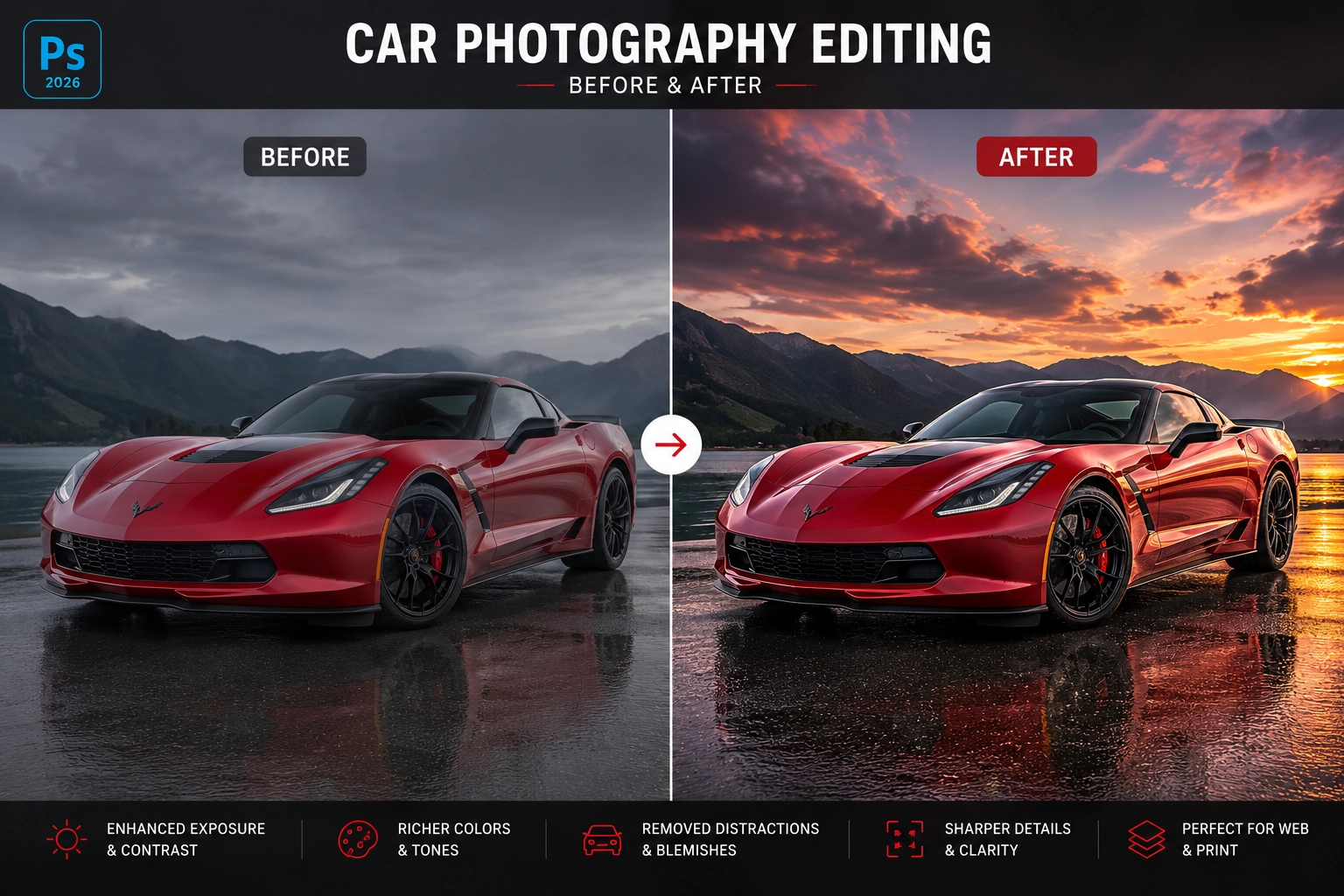
One of the most important things you can do when editing car photos is to adjust the exposure and contrast. Proper exposure ensures that your vehicle is well-lit, while balanced contrast helps define the body lines, curves, reflections, and fine details that make the car stand out.
In Photoshop 2026, the best place to begin is Camera Raw. It provides precise control over exposure, highlights, shadows, whites, and blacks, allowing you to recover lost details while maintaining a natural and realistic appearance. The histogram is still a valuable reference for evaluating tonal balance, but Camera Raw’s real-time adjustments make the editing process much faster and more efficient.
After correcting the exposure, you can fine-tune the overall contrast using the Tone Curve or Contrast controls in Camera Raw. These tools provide greater flexibility than the traditional Brightness/Contrast adjustment, allowing you to create deeper blacks, brighter highlights, and richer detail without making the image appear overprocessed.
2. Correct the White Balance
Another important aspect of editing car photos is correcting the white balance. White balance controls the overall color temperature of an image. If it is not adjusted correctly, your photo may appear too warm (yellow/orange) or too cool (blue), making the car’s paint color look inaccurate.
In Photoshop 2026, the easiest and most accurate way to correct white balance is through Camera Raw. The White Balance controls allow you to choose a preset or manually fine-tune the Temperature and Tint sliders to achieve natural, true-to-life colors. This is especially important in car photography, where accurate paint colors, chrome details, and reflections play a major role in the final image.
After correcting the white balance, review the image under different lighting conditions to ensure the colors remain balanced and consistent. Proper white balance helps create professional-looking car photos with realistic tones and a polished appearance.
3. Remove Blemishes
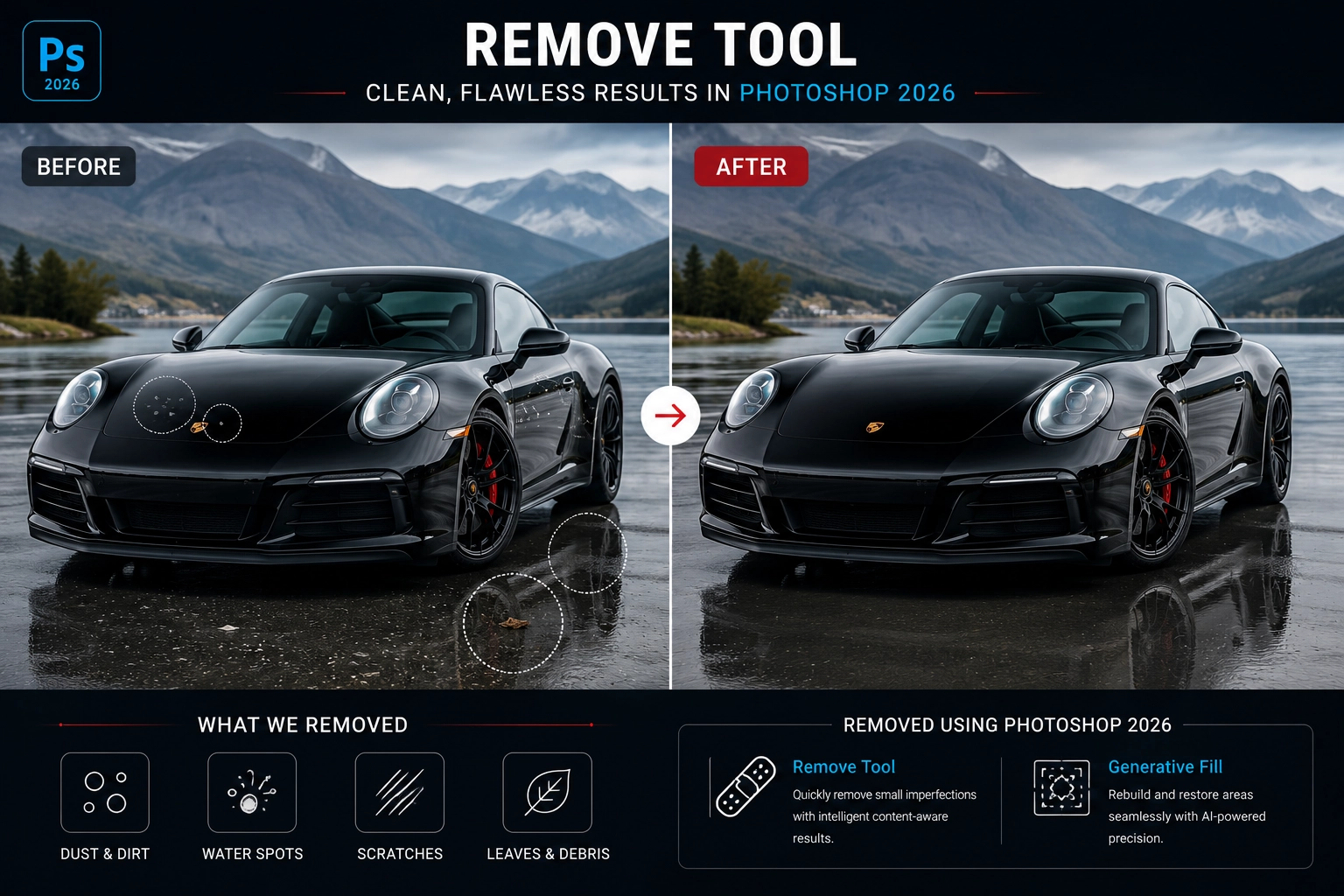
No car is perfect, and even the cleanest vehicles can have minor blemishes. These imperfections may include dust, dirt, water spots, fingerprints, small scratches, or unwanted reflections that can reduce the overall quality of your photo.
In Photoshop 2026, the Remove Tool provides the fastest and most effective way to eliminate these imperfections while preserving realistic textures and reflections. For larger distractions or missing areas, Generative Fill can intelligently rebuild surrounding details, creating a clean and natural-looking result. The Spot Healing Brush remains an excellent option for quickly removing small blemishes, while the Clone Stamp Tool is still useful for precise manual retouching in areas that require greater control.
Always zoom in and inspect the edited areas carefully to ensure the corrections blend naturally with the surrounding surfaces. Clean, distraction-free car photos help highlight the vehicle’s design, paint finish, and fine details, creating a more professional and visually appealing image
4. Enhance the Colors
The colors of a car play a major role in its overall appeal. Proper color enhancement can make the paint finish look richer, improve reflections, and highlight the vehicle’s design without making the image appear artificial.
In Photoshop 2026, the best place to enhance colors is Camera Raw, where you can fine-tune Hue, Saturation, Luminance (HSL), Vibrance, and Color Grading for more precise control. These tools allow you to enhance individual color ranges while maintaining realistic paint tones and natural lighting.
You can also use the Vibrance and Saturation controls to make your car photos stand out. Vibrance intelligently increases the intensity of less saturated colors while protecting already vibrant tones and skin colors in the surrounding environment. Saturation affects all colors equally, so it should be used carefully to avoid an overprocessed appearance. The goal is to create vibrant, realistic images that showcase the true beauty of the vehicle.
5. Add Effects
Photoshop offers a variety of creative effects that can be used to enhance your car photos. When applied carefully, these effects can add depth, improve visual impact, and help direct the viewer’s attention to the vehicle without making the image look unnatural.
In Photoshop 2026, subtle effects such as Vignette, Dodge & Burn, selective sharpening, and Smart Filters are commonly used to enhance automotive images. A soft vignette can naturally draw attention to the car, while Dodge & Burn helps define body lines, curves, and reflections for a more dynamic appearance. If appropriate, a realistic Lens Flare effect can still be added to complement natural sunlight or sunset scenes.
When adding effects, it is important to be subtle. It is easy to overdo creative effects, but the goal is always to enhance the photo rather than make it look artificial. Maintaining realistic colors, reflections, and lighting will produce professional-looking car photographs that stand the test of time.
Additional Tips for Professional Car Photography Editing in Photoshop
- Use Smart Objects and Layers – Layers and Smart Objects allow you to experiment with different editing techniques while preserving the original image. This makes your workflow more flexible and completely non-destructive.
- Work with non-destructive editing techniques – In Photoshop 2026, Adjustment Layers, Smart Filters, and Camera Raw editing let you refine your photos without permanently changing the original file.
- Keep your edits natural – It is easy to over-edit car photos with excessive contrast, saturation, or effects. Focus on enhancing the vehicle’s true colors, reflections, and details while maintaining a realistic appearance.
- Zoom in and inspect the details – Before exporting your image, check for dust spots, unwanted reflections, halos, or editing artifacts. Small imperfections can become noticeable in high-resolution images.
- Get feedback from others – Once you have finished editing, ask a colleague, friend, or client for feedback. A fresh perspective can help you identify small improvements before publishing or delivering the final image.
With a little practice and the powerful tools available in Photoshop 2026, you can create professional-quality car photographs that capture attention and leave a lasting impression on your audience.
Conclusion
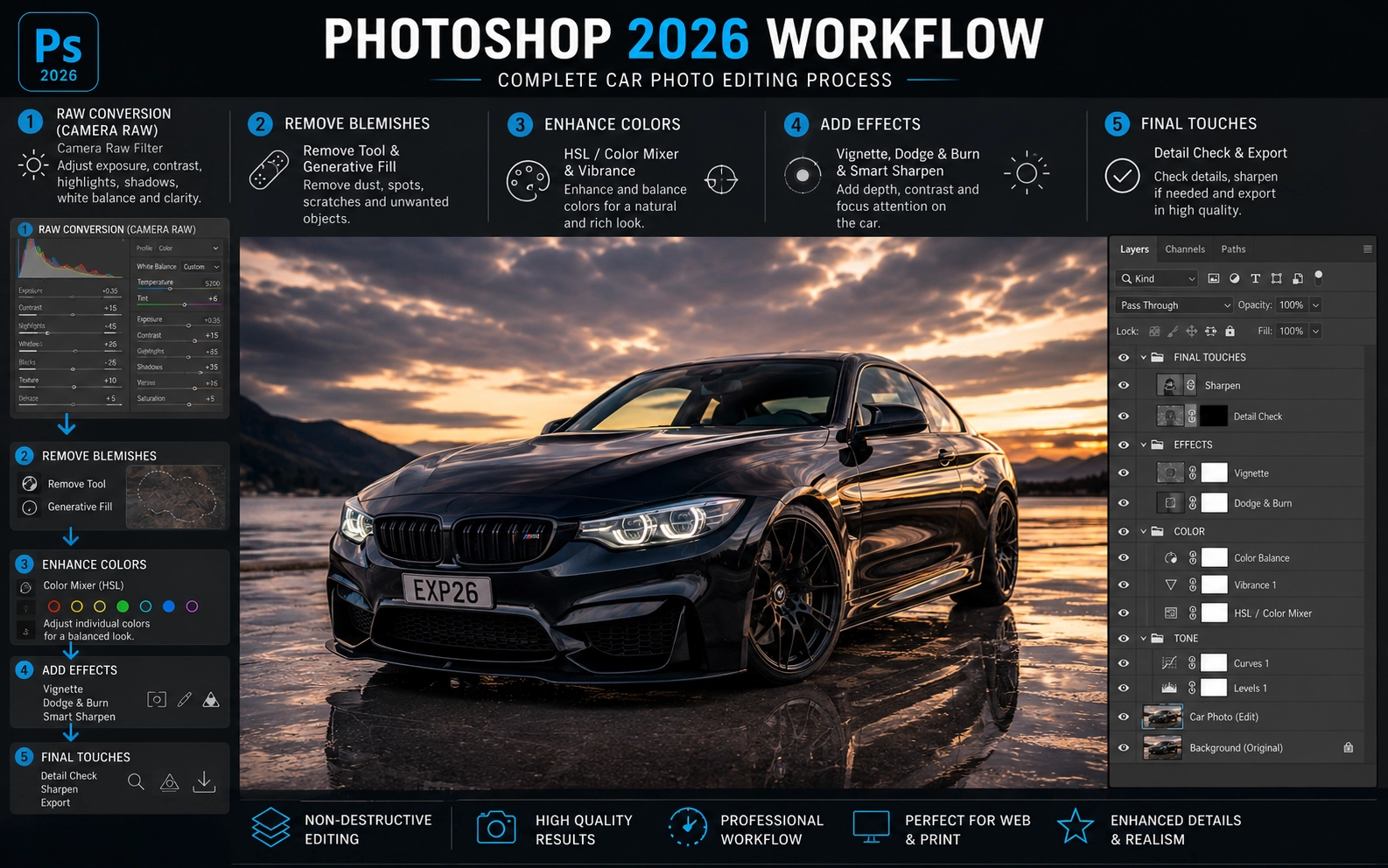
By following the techniques covered in this guide, you can use Car Photography Editing in Photoshop to create stunning automotive images that capture attention and leave a lasting impression. From adjusting exposure and white balance to removing blemishes, enhancing colors, and applying subtle creative effects, each step plays an important role in producing professional-quality results.
With the advanced capabilities of Photoshop 2026, including Camera Raw, the Remove Tool, Generative Fill, and non-destructive editing workflows, achieving high-quality car photography has become more efficient than ever. Remember to keep your edits natural, experiment with different techniques, and focus on enhancing the vehicle rather than overprocessing the image.
If you’re looking for professional automotive image editing, Mister Clipping Path is here to help. Our experienced editors combine expert manual retouching with the latest Photoshop 2026 techniques to deliver clean, realistic, and high-quality car images that are ready for websites, advertisements, dealerships, and social media.


Leave a Reply
Want to join the discussion?Feel free to contribute!