Why HDR Photo Editing Services are a Game-changer for Stunning Visuals 2026
Introduction to HDR photo editing
High Dynamic Range (HDR) photo editing has become an essential technique for creating visually striking and professionally balanced images. Whether you’re showcasing a luxury property, promoting products, capturing breathtaking landscapes, or producing commercial photography, HDR editing helps preserve details in both the brightest highlights and the darkest shadows that a single exposure often cannot capture.
Professional HDR photo editing services combine multiple bracketed exposures into one perfectly balanced image, resulting in natural colors, improved contrast, and enhanced clarity. Modern editing workflows also ensure that skies, interiors, reflections, and fine textures appear realistic without the overprocessed look often associated with early HDR photography.
Today, HDR editing is widely used across industries such as real estate, architecture, hospitality, automotive, interior design, and eCommerce, where high-quality visuals directly influence customer engagement and buying decisions. With advanced editing techniques and precise tone mapping, professionally edited HDR images create a more immersive viewing experience while maintaining a natural appearance.
In this guide, you’ll learn how HDR photo editing works, explore its key benefits, clear up common misconceptions, and discover why professional HDR editing services can significantly improve the quality and impact of your images.
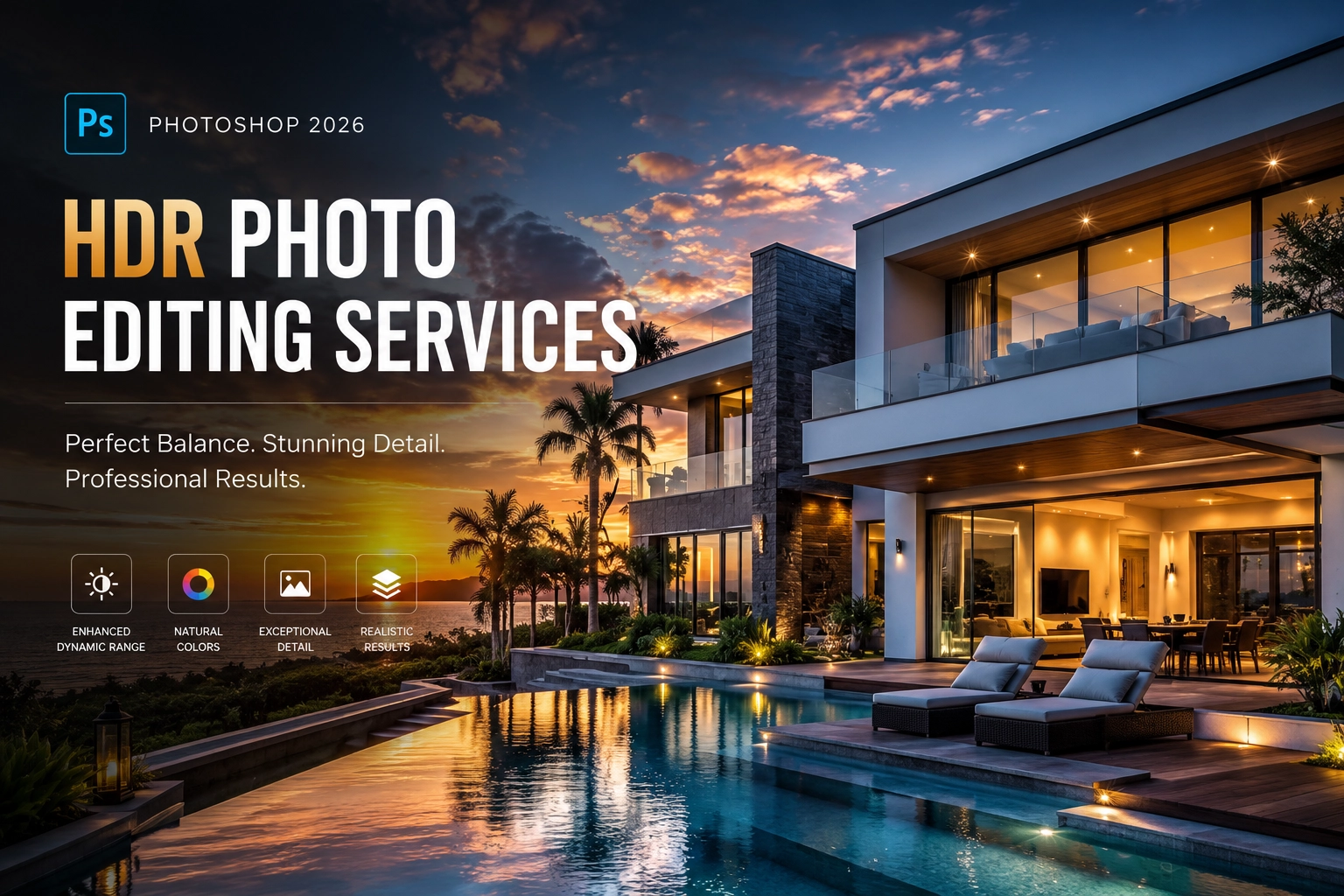
Benefits of using HDR photo editing services
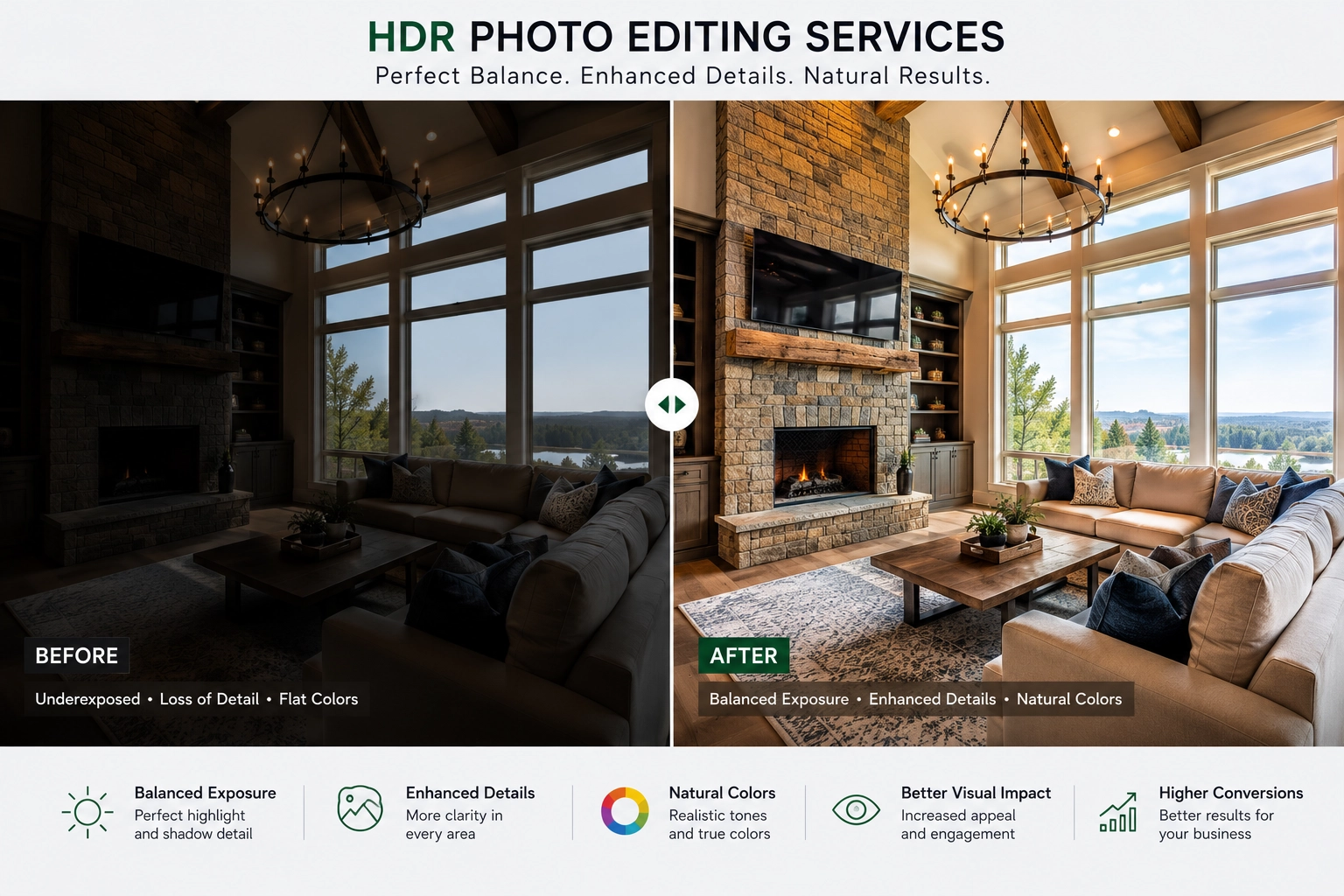
Professional HDR photo editing services do far more than simply brighten an image. They combine multiple exposures to create balanced, high-quality photographs that preserve fine details in both bright and dark areas while maintaining a natural appearance. This makes HDR editing an essential solution for photographers, real estate professionals, architects, hotels, and businesses that rely on visually compelling images.
- Balanced Exposure – HDR editing recovers detail from overexposed highlights and underexposed shadows, producing a well-balanced image that closely matches what the human eye naturally sees.
- Enhanced Detail and Clarity – Combining multiple exposures reveals textures and fine details that are often lost in a single photograph. From interior furnishings to architectural elements and outdoor landscapes, every part of the image appears sharper and more defined.
- Natural Colors and Improved Contrast – Professional HDR editing creates rich yet realistic colors without producing the oversaturated or artificial appearance commonly associated with older HDR techniques. Careful tone mapping ensures images remain clean, vibrant, and visually appealing.
- Increased Visual Impact – High-quality HDR images immediately capture attention, making them ideal for websites, property listings, brochures, advertisements, and social media campaigns where first impressions matter.
- Professional Presentation – Consistently edited HDR images strengthen your brand identity by presenting properties, products, and commercial spaces with a polished, professional look that builds trust with potential customers.
- Higher Engagement and Better Conversions – Eye-catching HDR visuals encourage more clicks, longer viewing times, and stronger customer engagement. For industries such as real estate and hospitality, professionally edited HDR photos can significantly improve listing performance and marketing results.
How HDR photo editing works
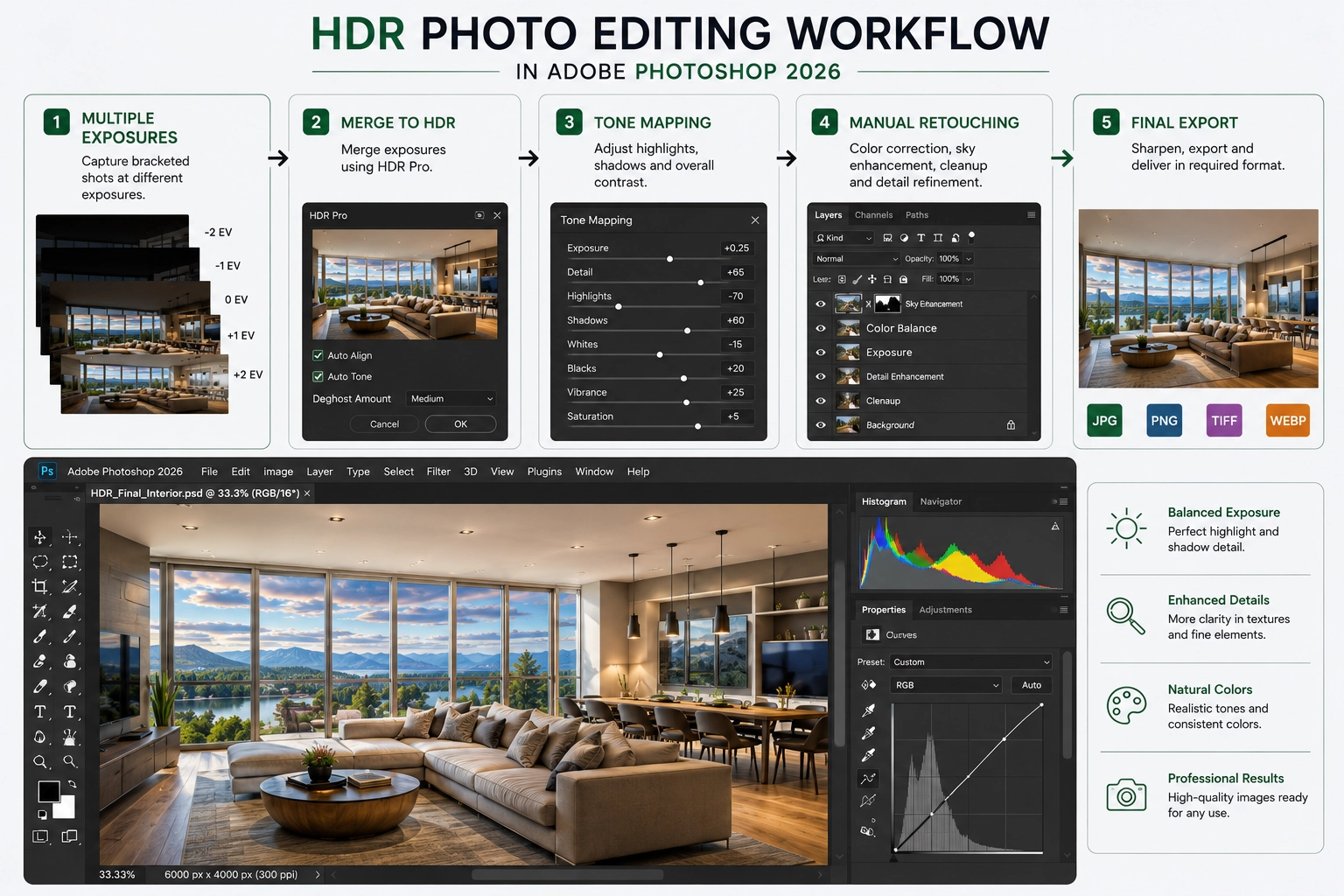
HDR (High Dynamic Range) photo editing combines multiple bracketed exposures of the same scene into a single, well-balanced image. Instead of relying on one photo, photographers typically capture three to seven exposures at different brightness levels to preserve details in both the highlights and shadows.
Modern HDR photo editing services use advanced editing software to merge these exposures while maintaining realistic colors, balanced contrast, and natural lighting. The goal is not to create an exaggerated HDR effect, but to produce an image that closely matches what the human eye sees.
A professional HDR editing workflow generally includes the following steps:
- Capture Multiple Exposures – Using exposure bracketing, several images are taken at different exposure values. This ensures that bright skies, dark interiors, and fine textures are all properly recorded.
- Merge the Exposures – The bracketed photos are combined using professional HDR software, creating a single image with an extended dynamic range and balanced overall exposure.
- Apply Tone Mapping – Tone mapping adjusts brightness and contrast across the image, preserving details in highlights and shadows while maintaining a realistic appearance.
- Perform Manual Retouching – Professional editors refine the HDR image by correcting colors, removing unwanted objects, reducing noise, improving sky details, fixing lens distortion, and enhancing overall clarity for a polished result.
- Final Color Correction and Export – The finished image undergoes final color grading and sharpening before being exported in the appropriate format for websites, property listings, print materials, or marketing campaigns.
By combining automated HDR processing with expert manual retouching, professional editors create clean, vibrant, and natural-looking images that stand out without appearing overprocessed.
Common misconceptions about HDR photo editing
Although HDR photography has become a standard technique in many industries, several misconceptions still prevent photographers and businesses from taking full advantage of professional HDR photo editing services. Let’s separate the myths from the facts.
- HDR Images Always Look Artificial – This is one of the most common misconceptions. Modern HDR editing focuses on creating natural-looking images, not exaggerated colors or unrealistic contrast. Professional editors carefully balance highlights, shadows, and colors to produce results that closely resemble what the human eye sees.
- HDR Is Only for Landscape Photography – While HDR is widely used for landscapes, it is equally valuable for real estate, architecture, interior design, hospitality, automotive, product photography, and commercial marketing. Any scene with a wide range of light and shadow can benefit from HDR processing.
- HDR Editing Is Fully Automatic – Many people believe HDR software can produce perfect results with a single click. In reality, professional HDR editing requires manual adjustments, including tone mapping, color correction, perspective correction, sky enhancement, object removal, and exposure refinement to achieve high-quality, natural-looking images.
- More HDR Means Better Quality – Increasing saturation, contrast, or local detail does not automatically improve an image. Overprocessing often creates halos, unnatural colors, and distracting artifacts. Professional HDR editing aims for balanced, realistic enhancements rather than dramatic effects.
- HDR Editing Is Only for Professional Photographers – Today’s businesses, real estate agencies, hotels, eCommerce brands, and marketing teams all use HDR editing to produce more attractive visuals. Professional HDR photo editing services help organizations of every size present their images with greater clarity and visual impact.
By understanding these misconceptions, you can make better decisions about when and how to use HDR editing to create professional, high-quality photographs.
When Should You Use HDR Photo Editing Services?
Professional HDR photo editing services are most effective when a scene contains both very bright and very dark areas that cannot be captured accurately in a single exposure. By combining multiple exposures and applying expert editing techniques, HDR creates balanced, natural-looking images with exceptional detail and clarity.
Here are some of the most common situations where HDR editing delivers the best results:
- Real Estate Photography – Real estate photographers frequently encounter challenging lighting conditions where bright windows and darker interiors appear in the same frame. HDR editing balances these exposures, producing inviting property images that showcase every room with natural lighting and realistic colors.
- Interior Design and Architecture – Architectural and interior photography require accurate color reproduction, sharp details, and balanced lighting. HDR editing preserves textures, furniture details, ceilings, flooring, and decorative elements while preventing blown-out windows and deep shadows.
- Hospitality and Luxury Properties – Hotels, resorts, restaurants, and vacation rentals rely on high-quality visuals to attract guests. HDR editing enhances both indoor and outdoor scenes, creating vibrant yet realistic marketing images that leave a strong first impression.
- Landscape Photography – Outdoor scenes often contain bright skies and darker foregrounds that exceed a camera’s dynamic range. HDR editing restores cloud detail, enhances natural colors, and reveals shadow information without making the image appear overprocessed.
- Automotive Photography – Vehicles photographed outdoors often suffer from harsh reflections and uneven lighting. HDR editing helps recover details in glossy surfaces, improves reflections, and produces clean, professional images suitable for dealerships and commercial advertising.
- Commercial and Product Photography – Businesses use HDR editing to present products, showrooms, and commercial spaces with consistent lighting and rich detail. Professionally edited HDR images create a polished appearance that builds trust and improves marketing performance.
No matter the industry, professionally edited HDR images help businesses present their work with greater clarity, realism, and visual impact—making them an essential part of modern digital marketing.
Conclusion: Embracing the power of HDR photo editing for stunning visuals
High-quality visuals play a crucial role in attracting customers, showcasing properties, and building a strong brand presence. Professional HDR photo editing services help transform ordinary bracketed exposures into balanced, natural-looking images with enhanced detail, accurate colors, and realistic lighting.
Whether you’re a real estate photographer, architect, hotel owner, automotive dealer, or commercial business, HDR editing can significantly improve the visual appeal of your images while creating a more engaging experience for your audience. By combining multiple exposures with expert retouching techniques, professional editors ensure that every image looks polished without appearing overprocessed.
As HDR technology continues to evolve, the demand for clean, realistic, and high-quality imagery will only continue to grow. Investing in professional HDR photo editing not only enhances your photographs but also helps strengthen your marketing efforts, improve customer engagement, and present your brand with greater confidence.
Need Professional HDR Photo Editing Services?
If you’re looking for reliable, high-quality HDR photo editing services, Mister Clipping Path is ready to help. Our experienced photo editors combine advanced HDR processing with meticulous manual retouching to deliver images that look natural, vibrant, and ready for publication.
Our HDR editing services include:
- HDR Photo Merging
- Exposure Blending
- Tone Mapping
- Color Correction
- Sky Replacement
- Perspective Correction
- Object Removal
- Image Enhancement
- Noise Reduction
- Professional Real Estate Photo Editing
Whether you need a few HDR images or thousands of professionally edited photographs every month, our team delivers consistent quality, fast turnaround times, and competitive pricing tailored to your business needs.
Contact Mister Clipping Paths today to discover how our professional HDR photo editing services can help your images stand out and leave a lasting impression.

Leave a Reply
Want to join the discussion?Feel free to contribute!